
The Air Campaign was kicked off by Task Force Normandy, as 2 USAF MH-53 Pave Low helicopters led 8 Army AH-64 attack helicopters across the Iraqi border...

At 2:38 a.m. on Jan. 17, 1991, U.S. Army 1st Lt. Tom Drew launched Operation Desert Storm by speaking into his radio microphone: “Party in ten.” The pilot of an AH-64 Apache attack helicopter, Drew was part of a joint Army-Air Force strike team making a secret, nocturnal attack on Iraqi radar stations. Drew’s radio call told others in the force that AGM-114 Hellfire air-to-ground missiles unleashed by Apaches would detonate on their targets in ten seconds.
It was called Task Force Normandy. The strike team consisted of a dozen helicopters – eight missile-firing Apaches with a ninth as a backup, a UH-60A Black Hawk for combat rescue if needed, and two Air Force MH-53J Enhanced Pave Low IIIs. The Pave Lows were equipped with a terrain-following and global positioning navigation system to bring the attackers to their destination.
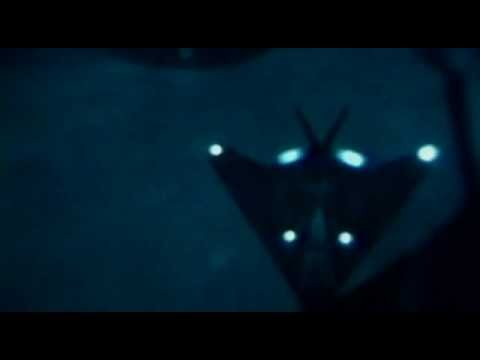
The target was a pair of Iraqi air defense radar installations. On the first night of a conflict, destroying these stations would open a path to Baghdad for warplanes of the coalition arrayed against Saddam Hussein. The timing of Task Force Normandy’s attack was determined by the projected time when Iraqi radar would detect Air Force EF-111A Raven aircraft preceding F-117A Nighthawk stealth fighters in attacks on downtown Baghdad. Destroying the radars would open a pathway for the bombers to proceed.
Army Lt. Col. (later, Gen.) Richard A. “Dick” Cody – a future vice chief of staff – led the strike. Lt. Col. (later, Col.) Richard L. “Rich” Comer led the Air Force contingent.
The attack was devised after U. S. Central Command, under Gen. Norman Schwarzkopf, decided against inserting Special Forces troops to destroy the sites. Apaches could bring firepower to bear on the targets and confirm that they had been destroyed.
After months of training, on Jan. 14, 1991, Cody’s force positioned itself under radio silence at Al Jouf, near Saudi Arabia’s border with Iraq. Cody divided the force into two teams. After an ultimatum to Iraq’s Saddam Hussein went unheeded and the order for war came, Cody led the White team out of Al Jouf. The Red team, led by Capt. Newman Shufflebarger, followed 12 minutes later.
The radar installations were close to the border but were separated by 70 miles. About 30 miles south of the target, the MH-53Js delivered their last position update and then peeled off to loiter nearby. The two Apache teams approached their respective radar sites. Each team split into two two-ship groups positioned half a mile apart.
The Hellfire warheads must have created a horrendous mess of concrete and metal churning inside the orange fireball associated with the missile. But the American helicopter crews never witnessed this. They turned home seconds before blowing up the radar sites and opening a 20-mile wide strip for coalition warplanes to travel into Iraq with impunity. Cody transmitted a radio signal indicating the strike had succeeded and led his helicopters back to safety. Minutes later, above a command center in Baghdad, an F-117A dropped the first bomb of the war. Thereafter, air operations faced little danger from what had been Saddam Hussein’s vaunted air defense network. Operation Desert Storm achieved its goal of liberating occupied Kuwait from Iraq six weeks later.
It is hard to imagine that it has been 20 years, and how far we have come as a military since then....




_is_refueled_by_Boeing_KC-135A-BN_(SN_55-3127)_061127-F-1234S-009.jpg/120px-Boeing_B-52D-70-BO_(SN_56-0582)_is_refueled_by_Boeing_KC-135A-BN_(SN_55-3127)_061127-F-1234S-009.jpg)
